
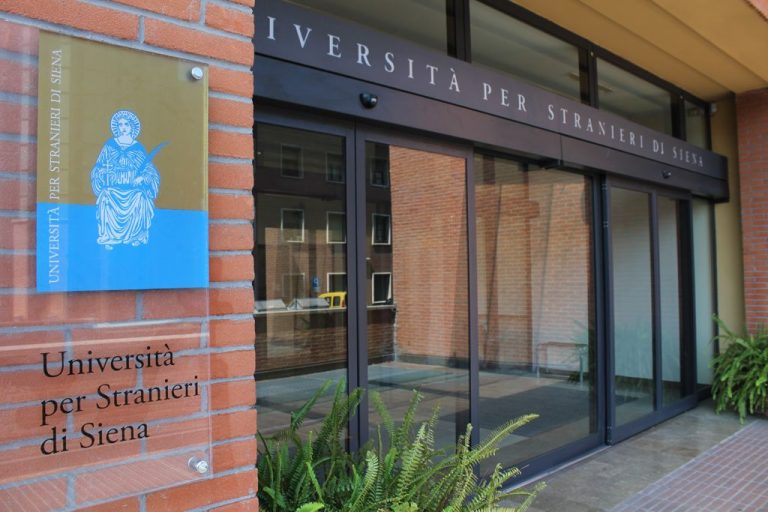
The AIILA project (Learning Italian Language Level L2 for immigrants with Artificial Intelligence) is a high-level educational research initiative promoted by the University for Foreignersof Siena within the framework of the Tuscany Region’s programme for cultural and educational innovation.
AIILA explores the ethical use of Artificial Intelligence, and in particular generative AI tools such as ChatGPT, to support the autonomous learning of Italian as a second language (L2) among adult migrants. The project targets refugees, asylum seekers, foreign detainees and women victims of trafficking, placing language learning at the intersection of culture, professional integration, and active citizenship.
Language and Culture: Learning Italian as Cultural Access
In AIILA, language learning is not reduced to the acquisition of grammatical competence. Italian L2 is approached as a gateway to cultural understanding, social participation, and personal empowerment.
Through carefully designed learning pathways, learners are encouraged to:
· Understand cultural norms and communicative practices
· Interpret social and institutional contexts
· Develop awareness of intercultural differences
Language thus becomes a cultural tool that enables learners to navigate everyday life, institutions, and relationships within the host society
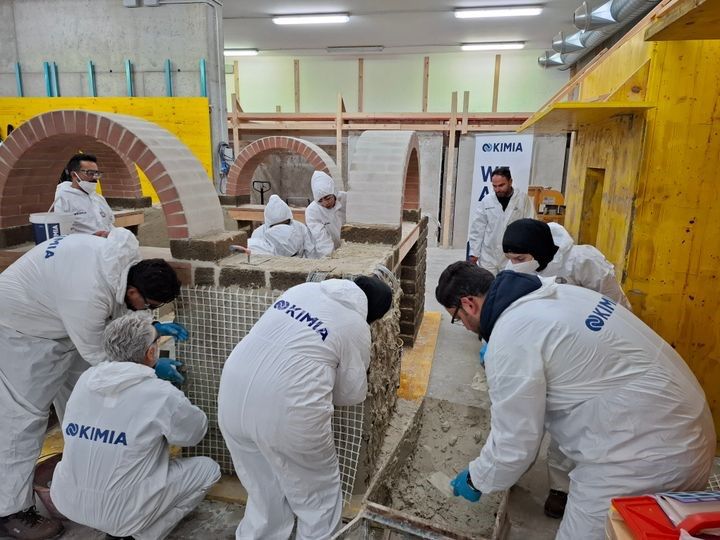
Craft and Professional Language: Learning Through Work Contexts
A central dimension of the AIILA project is the connection between language learning and professional practice. Many adult migrants are required to communicate effectively in work environments even when their formal linguistic competence is limited.
For this reason, AIILA integrates language learning with professional domains, focusing on sectors such as:
· Construction and manual trades
· Catering and food services
· Domestic work and care professions
By working on authentic professional language and scenarios, the project highlights craft not only as manual skill, but as a space where language, know-how, and identity intersect. AI-supported
learning is tested as a means to help learners acquire functional, context-based language that supports employability and professional dignity.
Citizenship and Inclusion Through Language Education
Language competence is a key condition for active citizenship. AIILA explicitly addresses the role of Italian L2 in enabling migrants to exercise their rights, fulfill their duties, and participate fully in social life.
The project promotes citizenship by:
· Supporting communicative autonomy in institutional and social contexts
· Encouraging learner responsibility and self-directed learning
· Strengthening confidence and participation
Special attention is given to vulnerable learners whose access to education and digital tools is often limited. In this sense, AIILA views linguistic inclusion as a prerequisite for social inclusion and democratic participation.
Ethics, Teachers and Digital Citizenship
AIILA adopts a strongly ethical approach to Artificial Intelligence. AI is not conceived as a replacement for teachers, but as a mediated tool whose use requires critical awareness.
The project investigates teachers’ beliefs about AI and supports reflection on:
· Responsible and transparent use of generative AI
· Risks of exclusion linked to digital illiteracy
· The development of digital citizenship skills
Digital literacy is therefore treated as a cultural and civic competence, essential for navigating contemporary societies shaped by technology.
Experimental Pathways and Shared Knowledge
The educational intervention is based on a comparative experimental design, with one group supported by AI tools and a control group following the same pathway without AI. Both are monitored through tests, observation tools and motivation questionnaires.
Results will be analysed, standardized and disseminated through public events and training initiatives, contributing to a shared reflection on inclusive language education.
An Educational Vision Linking Culture, Craft and Citizenship
AIILA proposes a holistic vision of language education in which culture, craft and citizenship are deeply interconnected. Learning Italian means understanding cultural codes, developing professional competence, and becoming an active member of society.
By placing ethical Artificial Intelligence at the service of vulnerable learners, the project demonstrates how innovation can support inclusion, dignity and participation—key values for a more cohesive and culturally aware Europe.
Upcoming milestones of the AIILA project:
in collaboration with the partner Caritas Siena, June has been agreed as the month for organizing the activity aimed at identifying two groups of learners who will take part in the experimental mini-course, which will be carried out between September and December 2026.
In addition, in agreement with the partner Siena Italtech, a free online webinar will be organized for teachers of Italian as a second language (L2), focusing on the design of digital teaching materials for disadvantaged and vulnerable learners, as a dissemination activity not originally included in the project.
Finally, in May, the University for Foreigners of Siena will organize a new edition of the Awareness Day on Intercultural and Interlinguistic Values (3rd edition).